
Dive into the fascinating world of global mobile data consumption, where connectivity shapes daily life. This analysis uncovers the nations leading the charge in per capita mobile data usage, highlighting a striking disparity across different regions. From the hyper-connected to emerging markets, understanding these patterns is key to grasping digital evolution.
Mobile data usage refers to the amount of data transferred over a cellular network by a mobile device within a given period. It encompasses activities like browsing the internet, streaming media, using apps, and communicating, measured typically in gigabytes (GB).
The global landscape of mobile data consumption offers a fascinating glimpse into our increasingly connected world, revealing not just how much data we use, but also the underlying factors driving these trends. Examining the annual average mobile data usage per capita across various nations brings to light significant differences, painting a picture of digital adoption, infrastructure development, and cultural reliance on mobile technology.
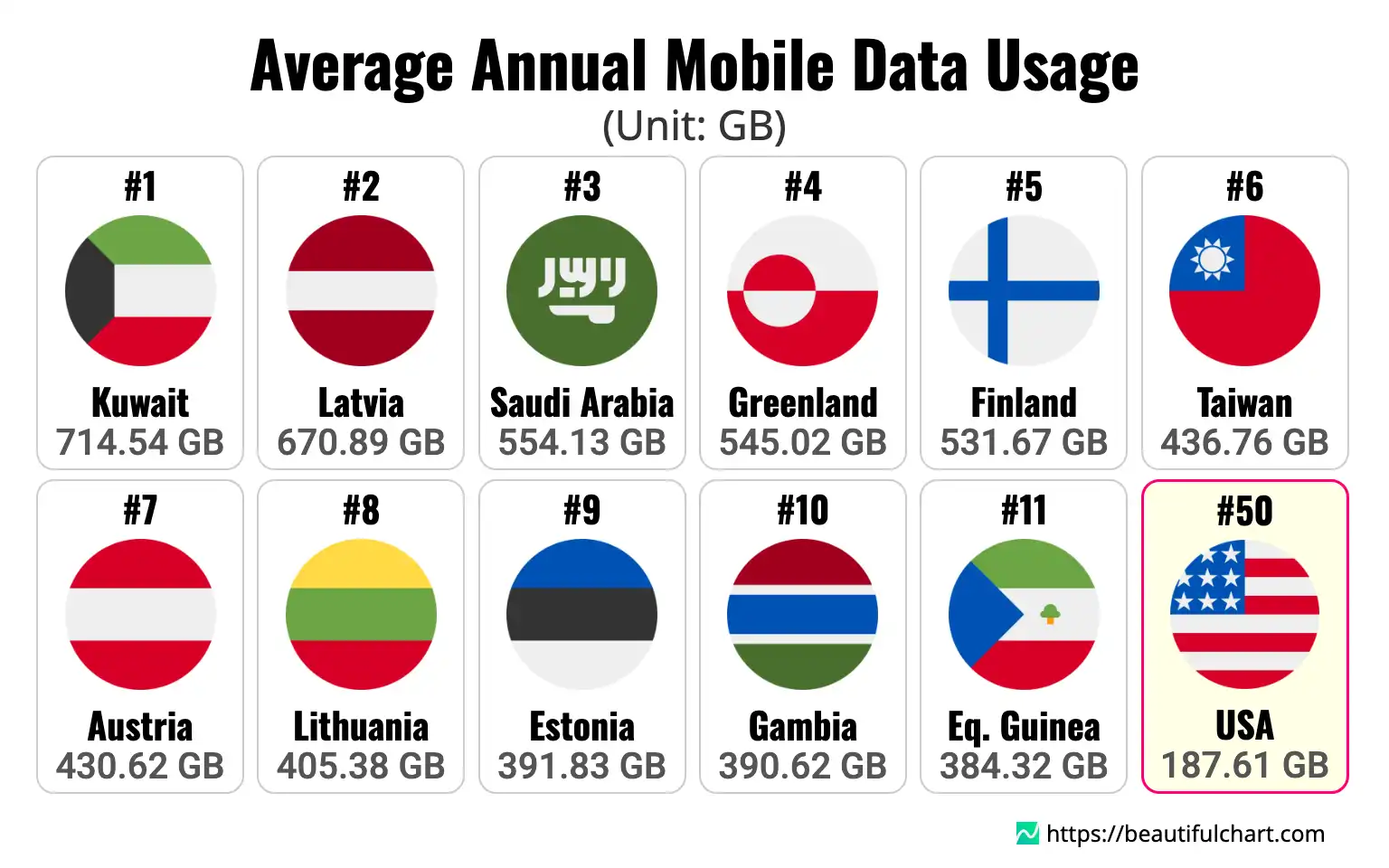
At the forefront of this digital surge are countries like Kuwait, Latvia, and Saudi Arabia, demonstrating a per capita usage that far surpasses many others. Kuwait, for instance, leads with an astounding 714.54 GB annually. This isn't merely a number; it reflects a populace deeply embedded in a mobile-first digital ecosystem. Factors contributing to such high usage often include widespread access to cutting-edge 5G networks, highly competitive data plans that make extensive usage affordable, and a lifestyle where mobile devices are central to entertainment, communication, and commerce. In regions with a youthful demographic and a strong preference for social media, video streaming, and online gaming, these figures naturally climb.
Consider the case of Saudi Arabia, which, with 554.13 GB, showcases a similar trend. A young, tech-savvy population combined with significant national investments in digital infrastructure creates an environment ripe for high data consumption. The push towards digital transformation by governments also plays a role, encouraging citizens to engage with online services and applications. Similarly, Finland, a long-standing leader in technological innovation, records 531.67 GB, illustrating how a mature digital economy with advanced network capabilities and a digitally literate citizenry naturally fosters extensive mobile data engagement.
Interestingly, even geographically isolated nations like Greenland, with 545.02 GB, exhibit high usage. This scenario often suggests that mobile connectivity isn't just a convenience but a vital lifeline, connecting communities and individuals who might otherwise face significant isolation. In such contexts, mobile data becomes the primary conduit for information, entertainment, and essential services, bridging vast distances and harsh environments.
On the other hand, countries like the United States, while possessing a highly developed digital infrastructure, appear at a more moderate position, with 187.61 GB per capita. This isn't to say Americans aren't digitally active. Rather, it highlights a potential difference in how data is consumed. In the U.S., there's often a greater reliance on fixed broadband internet at home and widespread Wi-Fi availability in public spaces and workplaces. This extensive Wi-Fi offloading can reduce the apparent mobile data consumption, as much of the internet usage occurs without tapping into cellular networks. Additionally, the sheer diversity of data plans and pricing models in the American market might lead to varying consumption behaviors, with many users opting for plans that balance cost and data allowances. However, even with these factors, mobile data remains indispensable for navigation, on-the-go communication, and entertainment, reinforcing the critical role of smartphones in daily American life.
The disparity in data usage across the globe underscores the varied stages of digital maturity and infrastructure development. Nations with emerging digital economies may show lower per capita usage due to less widespread access, higher costs, or a population less accustomed to data-intensive applications. However, as mobile networks expand and become more affordable, these figures are expected to rise universally. The ongoing deployment of 5G technology, with its promise of ultra-fast speeds and low latency, is also set to accelerate this trend, enabling new applications and services that will further drive data demand.
Beyond infrastructure, cultural factors and daily routines significantly influence data habits. In some societies, social interactions are heavily mediated by mobile platforms, leading to constant communication and media sharing. In others, a preference for traditional media or face-to-face interactions might keep data usage comparatively lower. The global trend, however, points towards an ever-increasing integration of mobile technology into every facet of human activity. Understanding these dynamics is crucial for telecommunication providers, policymakers, and anyone interested in the evolving digital landscape, as mobile data continues to shape how we work, learn, and connect with the world.

Annual Mobile Data Use
Dive into the fascinating world of global mobile data consumption, where connectivity shapes daily life.
Data Source: ITU DataHub
Image Source: Freepik from www.flaticon.com
Key Takeaways
Global Digital Divide
- There's a significant disparity in mobile data consumption per capita globally, with top countries using more than three times the data of those further down the list.
- Developed nations and those with strong digital infrastructure tend to show higher engagement in mobile data usage.
- Cultural factors and access to alternative internet sources (like fixed broadband) likely influence these consumption patterns.
Economic and Infrastructure Impact
- High mobile data usage often correlates with robust telecommunications infrastructure and competitive data markets.
- Nations investing heavily in digital transformation and mobile network expansion see their populations consuming more data.
- The availability and affordability of mobile data plans play a crucial role in driving adoption and usage rates.
Lifestyle and Connectivity
- Mobile devices are increasingly central to daily life, driving demand for data-intensive applications like streaming, gaming, and social media.
- In some regions, mobile connectivity is the primary means of internet access, making data usage essential for communication, education, and entertainment.
- The continuous evolution of mobile technology and services is expected to further boost global data consumption in the coming years.
Top Ranking
#1 Kuwait 714.54 GB
Known for its advanced telecommunications infrastructure and a digitally savvy population, Kuwait leads the global charts in annual mobile data consumption per capita. This high usage often reflects a lifestyle deeply integrated with digital services, extensive social media engagement, and widespread access to high-speed mobile internet. The nation's demographic structure, with a high proportion of expatriates relying on mobile communication, also contributes significantly to these elevated figures.
#2 Latvia 670.89 GB
Ranking second, Latvia demonstrates robust mobile data usage, indicative of its strong digital economy and accessible mobile networks. The country has made significant strides in digital transformation, with citizens actively engaging in online activities, from streaming entertainment to utilizing digital public services. This high consumption rate underscores Latvia's position as a digitally advanced European nation, where mobile connectivity is a cornerstone of daily life.
#3 Saudi Arabia 554.13 GB
With a young and digitally native population, Saudi Arabia exhibits remarkably high mobile data consumption. The nation has heavily invested in digital infrastructure, facilitating widespread access to high-speed mobile internet. Social media, online gaming, and video streaming are hugely popular, driving up data usage. This trend is further supported by government initiatives promoting digital transformation and innovation across various sectors.
#4 Greenland 545.02 GB
Despite its remote geographical location and sparse population, Greenland shows an exceptionally high per capita mobile data usage. This could be attributed to the unique digital needs of its residents, where mobile connectivity often serves as a vital link to the outside world and a primary source of entertainment and information in isolated communities. High-speed mobile internet access helps bridge geographical divides, making digital services indispensable.
#5 Finland 531.67 GB
A pioneer in telecommunications and home to globally recognized tech companies, Finland's high mobile data consumption is no surprise. Its tech-literate population embraces digital services for almost every aspect of life, including work, education, and leisure. The country boasts excellent mobile network coverage and competitive data plans, encouraging extensive use of streaming services, mobile gaming, and cloud-based applications, solidifying its digital leadership.
#50 USA 187.61 GB
Ranking at number 50, the United States presents a substantial yet comparatively lower per capita mobile data usage compared to the top-tier countries. This position, despite a technologically advanced society, might reflect a greater reliance on Wi-Fi networks in homes and workplaces, coupled with a diverse range of data plans available. American consumers extensively use mobile data for a multitude of purposes, from social media and entertainment to productivity and navigation, underscoring the ubiquitous role of smartphones in daily life.
| Rank | Name | Indicator |
|---|---|---|
1 |  Kuwait Kuwait | 714.54 GB |
2 |  Latvia Latvia | 670.89 GB |
3 |  Saudi Arabia Saudi Arabia | 554.13 GB |
4 |  Greenland Greenland | 545.02 GB |
5 |  Finland Finland | 531.67 GB |
6 |  Taiwan Taiwan | 436.76 GB |
7 |  Austria Austria | 430.62 GB |
8 |  Lithuania Lithuania | 405.38 GB |
9 |  Estonia Estonia | 391.83 GB |
10 |  Gambia Gambia | 390.62 GB |
11 |  Eq. Guinea Eq. Guinea | 384.32 GB |
12 |  Iceland Iceland | 364.48 GB |
13 |  Malaysia Malaysia | 347.23 GB |
14 |  Thailand Thailand | 345.30 GB |
15 |  Sweden Sweden | 334.36 GB |
16 |  Bahrain Bahrain | 323.80 GB |
17 |  Jordan Jordan | 316.74 GB |
18 |  Kyrgyzstan Kyrgyzstan | 311.07 GB |
19 |  Chile Chile | 301.81 GB |
20 |  Cyprus Cyprus | 284.91 GB |


