This analysis reveals the average height rankings of adult males aged 18 worldwide, highlighting significant regional variations across different nations. The Netherlands takes the top spot with an impressive average of 182.5 cm, while countries like the United States rank 37th at 177.1 cm. These figures reflect a complex interplay of genetics, nutrition, and socioeconomic development over generations.
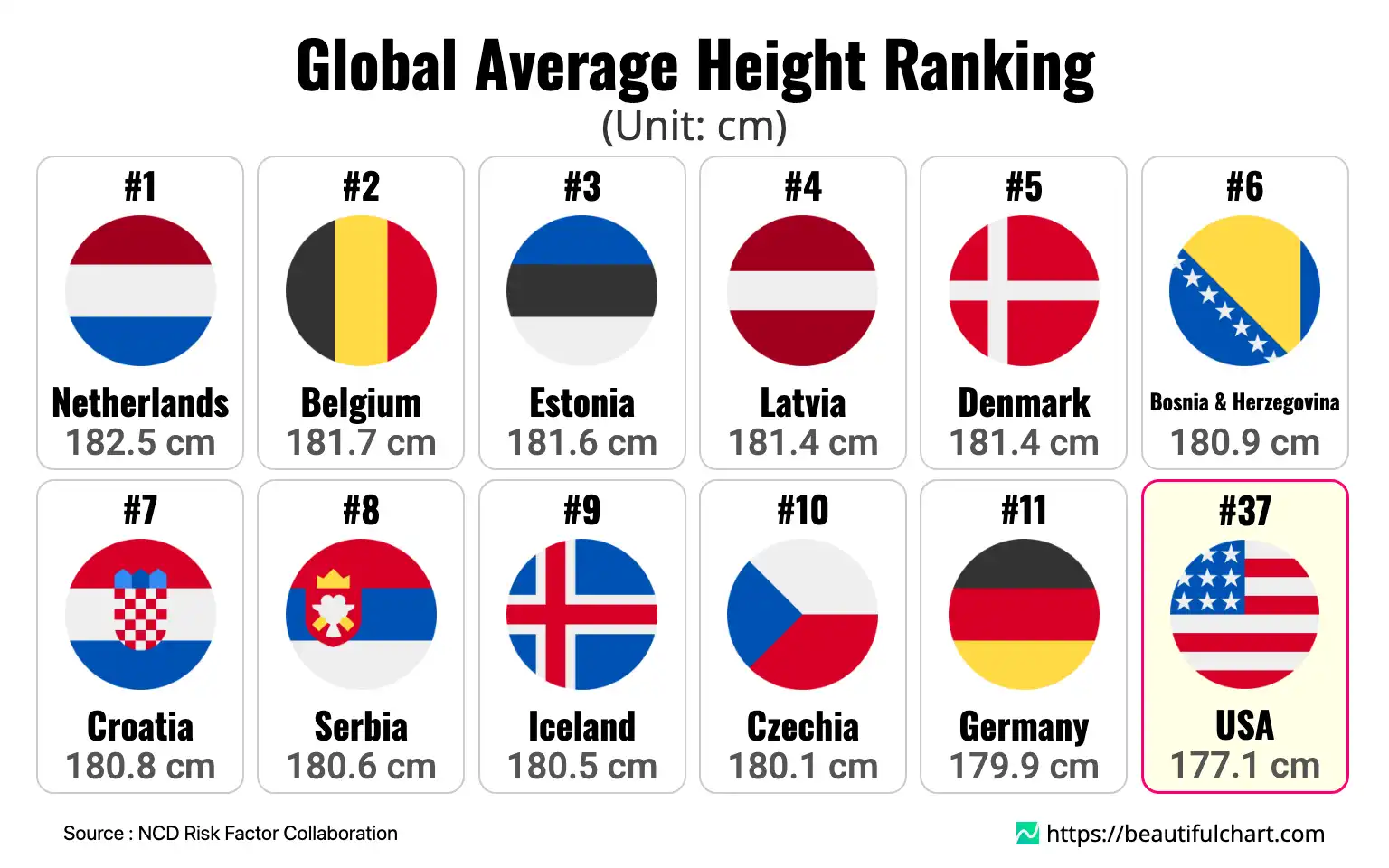
Adult male average height refers to the mean stature of fully grown men within a specific population, typically measured at age 18 when skeletal growth is complete, serving as an important indicator of public health and living standards.
Human height is a fascinating metric that serves as a mirror for a population's overall health, nutritional status, and living conditions throughout childhood and adolescence. When researchers examine international health and growth patterns, they often look at cohorts of young adults to understand how environmental factors shape human biology. The data clearly shows that geographic regions play a massive role in shaping these physical attributes, with Northern and Central European populations consistently occupying the upper echelons of the height spectrum.
Genetics certainly provides the baseline potential for an individual's height, but environmental variables determine whether that potential is fully realized. Access to high-quality protein, dairy, and a balanced diet during the crucial developmental years is paramount. Furthermore, robust public healthcare systems, lower rates of childhood infectious diseases, and overall economic prosperity allow populations to reach their maximum biological growth limits. This explains why affluent nations with strong social safety nets often report higher national height averages.
Looking across the Atlantic, the United States presents an interesting case study. Ranking 37th with an average of 177.1 cm, the US sits comfortably above the global median but trails behind many European counterparts. This positioning is influenced by the nation's immense ethnic diversity, varying socioeconomic landscapes, and differing access to healthcare and nutrition across different demographic groups. Public health researchers note that national averages can sometimes mask significant internal disparities based on income and region.
Conversely, regions facing chronic food insecurity, political instability, or systemic economic challenges often see stunted growth trends across generations. As global supply chains improve and healthcare expands to developing areas, average heights in many lower-ranking nations have begun to shift upward. However, closing the gap between the tallest and shortest nations remains a gradual process tied directly to global economic equity and public health infrastructure advancements.

Global Adult Male Height Rankings by Country
This analysis reveals the average height rankings of adult males aged 18 worldwide, highlighting significant regional variations across different nations.
Data Source: NCD Risk Factor Collaboration
Image Source: Freepik from www.flaticon.com
Key Takeaways
European Dominance
- Northern and Central European nations occupy the highest spots on the global height rankings.
- Countries like the Netherlands, Belgium, and Estonia lead the world with averages exceeding 181 cm.
- High protein availability and advanced healthcare systems contribute significantly to these figures.
Socioeconomic Impact
- National height averages closely correlate with childhood nutrition and economic prosperity.
- The United States ranks 37th with an average of 177.1 cm, reflecting its diverse demographics.
- Developing regions often show lower averages due to historical challenges in public health and food security.
Top Ranking
#1 Netherlands 182.5 cm
The Netherlands claims the top position globally for adult male height, reflecting decades of excellent public health infrastructure, high dairy consumption, and strong genetic predispositions. The nation's steady climb in average height over the past century highlights the profound impact of rising living standards and universal healthcare access on physical development.
#2 Belgium 181.7 cm
Securing the second spot, Belgium demonstrates the characteristic high stature typical of Western and Northern European populations. Generous access to quality nutrition during childhood and adolescence ensures that young Belgian men consistently reach their full genetic growth potential.
#3 Estonia 181.6 cm
Estonia stands proudly in third place, representing the impressive height averages found across the Baltic region. Rapid economic development and improved living conditions following the late 20th century have allowed younger cohorts in Estonia to surpass historical height limitations.
#4 Latvia 181.4 cm
Sharing the fourth position, Latvia exhibits strong physical development patterns similar to its Baltic neighbors. High protein intake and strong emphasis on physical education and sports culture contribute to the tall average stature observed among young Latvian men.
#4 Denmark 181.4 cm
Denmark ties for the fourth rank, underscoring the Scandinavian region's dominance in population height metrics. The country's egalitarian social model, excellent work-life balance, and robust welfare state provide an optimal environment for healthy child development.
#37 USA 177.1 cm
The United States ranks 37th globally, positioned well above the international median yet behind top-tier European nations. This average reflects a vast, highly diverse population where regional, economic, and ethnic variations create a wide spectrum of health and nutritional outcomes.
| Rank | Name | Indicator |
|---|---|---|
1 |  Netherlands | 182.5 cm |
2 |  Belgium | 181.7 cm |
3 |  Estonia | 181.6 cm |
4 |  Latvia | 181.4 cm |
4 |  Denmark | 181.4 cm |
6 |  Bosnia & Herzegovina | 180.9 cm |
7 |  Croatia | 180.8 cm |
8 |  Serbia | 180.6 cm |
9 |  Iceland | 180.5 cm |
10 |  Czechia | 180.1 cm |
11 |  Germany | 179.9 cm |
12 |  Slovenia | 179.8 cm |
13 |  Norway | 179.7 cm |
13 |  France | 179.7 cm |
13 |  Sweden | 179.7 cm |
16 |  Finland | 179.6 cm |
17 |  Slovakia | 179.5 cm |
18 |  Australia | 179.2 cm |
19 |  Lithuania | 179.0 cm |
20 |  Ireland | 178.9 cm |